

Java Connectivity with Google Cloud Trace
via JDBC Driver Pack
The JDBC Driver Pack enables Java programs to access Google Cloud Trace data through structured, database-like tables. Java applications can query trace spans, latency details, and trace metadata using SQL-style queries through the JDBC API, supporting reliable Java database connectivity and performance analysis workflows.
Addressing Java Integration Barriers
Working with Google Cloud Trace data introduces challenges such as:
Java Database Connectivity Solutions
The JDBC Driver Pack presents Google Cloud Trace API data as structured tables,
enabling Java applications to work with trace data using familiar JDBC patterns.
Tabular Access to Trace Data
Trace spans, timing information, and related metadata are exposed as structured tables for query and analysis.
SQL-Style Queries via JDBC API
Java programs can use SQL-style queries through the JDBC API to retrieve trace data without manual REST handling.

Metadata Discovery Support
Schema information is available through standard JDBC metadata interfaces to support Java database connectivity.
Optimized Data Handling
Built-in pagination and request management support stable database connectivity for high-volume trace data.
Benefits for Your Business
Centralized Performance Analysis
Integrate trace and latency data into Java applications, analytics tools, or reporting systems using consistent database connectivity.
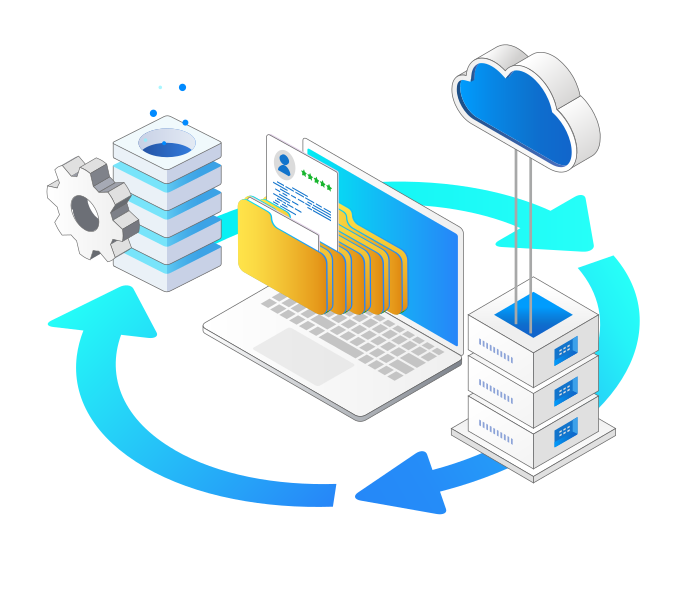
Simplified Java Integration
Enable Java programs to access distributed tracing data through standard JDBC APIs, reducing custom integration effort.
Streamlined JDBC Features for Java Developers
Quick Setup
Easily configure JDBC URLs for Java applications with minimal effort through a straightforward setup process.
SQL Query Support
Execute SQL statements such as SELECT, INSERT, UPDATE, DELETE, and UPSERT using the JDBC API.
Advanced Query Capabilities
Leverage metadata discovery, prepared statements, and optimized execution for Java database connectivity.
Performance Optimization
Adjust caching and query timeouts while utilizing connection pooling in Java programs for better efficiency.
Secure Access Management
Utilize OAuth and API keys for secure JDBC access from Java applications without complex configuration logic.
Compatible with Leading JDBC Tools
Work with DbVisualizer, DBeaver, SQuirreL SQL, and other JDBC tools commonly used by Java developers.
JDBC API Access in Java Applications
Reliable JDBC API access for trace
data in Java applications.
The JDBC Driver Pack provides structured access to Google Cloud Trace through the JDBC API, allowing Java applications to retrieve trace spans and latency information using familiar JDBC interfaces and SQL style syntax. This approach supports Java based observability workflows while giving developers full control through standard JDBC patterns and application logic.
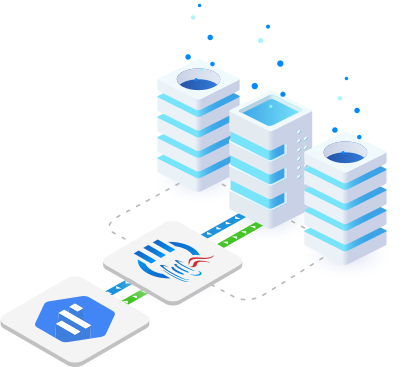
Developer APIs JDBC Drivers
Our JDBC Driver Pack includes a diverse selection of
drivers for seamless connectivity across business applications.

Auth0

Avro

Azure DevOps

Azure Maps

Azure Table
Premium CSV

Duo Security

Elasticsearch

GitHub

GitLab

Google Cloud Monitoring
Google Cloud Trace
Google Knowledge Catalog
GraphQL

Okta

OneLogin
OpenAI

OpenSearch
Parquet

Premium OData
Splunk
FAQ
The KingswaySoft JDBC Driver for Google Cloud Trace utilizes the Standard JDBC Interface to provide a structured, database-style interface for the Google Cloud Trace API. This allows Java applications and BI tools to directly query and analyze distributed tracing data, including traces and spans, using familiar SQL.
The driver supports two primary authentication modes: OAuth Authorization Code (for user-based access) and Service Account authentication. These methods provide secure access to your Google Cloud data.
You use standard SELECT statements with the JDBC Statement or PreparedStatement objects. The driver translates these queries into the appropriate Google Cloud Trace API calls to retrieve trace and span data, which is returned as a standard JDBC ResultSet for easy consumption.
You can use the JDBC DatabaseMetaData interface to discover the available schema. The getTables() method returns a list of queryable entities (such as traces and spans), while getColumns() provides detailed information about the fields within a specific trace or span table.
Yes, the driver is fully compliant with JDBC 3.0 and JDBC 4.0 standards, ensuring seamless integration with popular BI, reporting, ETL tools, and Java IDEs like Eclipse and IntelliJ.
Get In Touch
If you would like to know more specific details about our solutions, or if you have any suggestions about our product offerings, we are always here to listen and help!
Contact Us