

ShipStation
Data Solutions
via SSIS Integration Toolkit & JDBC Driver Pack
Easily connect and integrate ShipStation data using KingswaySoft’s feature-rich JDBC Driver Pack, Integration Gateway and SSIS Components.

Explore Data Solutions for ShipStation

SQL Server-Based Integration

Java
Connectivity

Real Time Integration
The Most Feature-Rich and Flexible Data Solutions
SSIS Connectors - ETL Components - JDBC Drivers - Productivity Tools
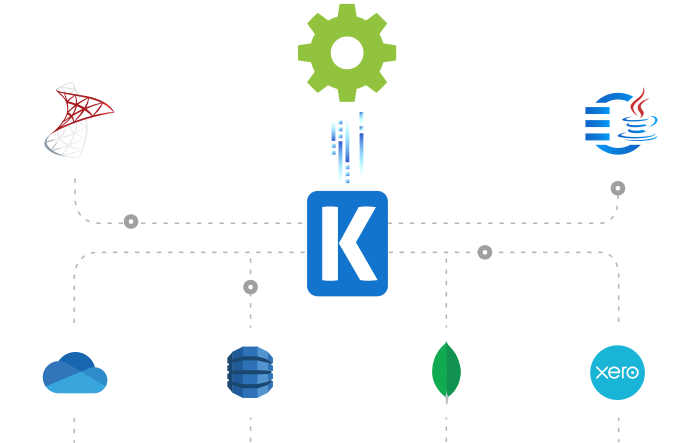
SQL Server Based Data Integration
Powerful SSIS Connectivity for ShipStation

Integrate ShipStation with Any Source and Destination
Integrate and migrate data to and from ShipStation using SSIS with any other application or data source including Google Ads, Salesforce, and HubSpot, to name just a few.
Java Connectivity
Reliable, Simplified Data Access for ShipStation
Easily connect ShipStation with your ETL, reporting, BI, and other applications to ensure client records are always up-to-date, providing greater visibility across the organization and keeping all teams informed on the status of relevant issues.
Real-Time Syncing
Set Up Webhook Listeners to Receive Messages from ShipStation
Leverage Integration Gateway's Custom Webhooks to instantly capture and process data changes in ShipStation, enabling real-time integration to keep data up-to-date across systems.
More Accounting & Commerce Components
Our Accounting and Commerce components make it easy to integrate with different services within the ETL process. Each service available has specific components that have been developed to work with all the intricacies of that particular accounting/commerce solution. In addition to ShipStation, we support the following Accounting & Commerce services:
Browse Connectors

Authorize.net

BigCommerce

Bill.com

Chargebee

Maxio (Chargify)

eBay

Expensify

FreshBooks

Magento

MYOB

Open Accounting

Paycor

PayPal

Prestashop

QuickBooks

Sage Business Cloud

Shopify

Square

Stripe

WooCommerce

Xero

Zoho Books

Zoho Expense

Zoho Invoice

Zuora
We have been using the SSIS Integration Toolkit, the SSIS Integration Toolkit for Microsoft Dynamics 365 (CRM/AX/NAV), and the SSIS Integration Toolkit for Microsoft SharePoint. The Kingswaysoft components are extremely easy to use, and make programming SSIS packages a breeze!
Download Solutions for ShipStation



FAQ
To connect SSIS to ShipStation, add a REST (KingswaySoft) Connection Manager to your project. After configuring authentication and connection details, you can optionally set custom HTTP headers on the Custom Headers page by specifying Header Name and Header Value. Use the green icon to add headers or the red icon to remove them. Ensure secure connections by avoiding unsafe settings unless your network is fully internal and trusted.
The ShipStation REST Source Component allows reading data from ShipStation REST services. Configure the component by selecting a Connection Manager, Source Object, Endpoint, and optional filter parameters. You can specify batch size, output time zone, and dynamically refresh metadata. The Columns page lets you select which fields to retrieve, and the Manage Additional Fields editor allows adding secondary outputs or sub-object fields.
The ShipStation REST Destination Component writes data to ShipStation REST services. You can select a Connection Manager, Destination Object, and Action, then map upstream input columns to REST fields. Advanced features include child object inputs for hierarchical data, batch size, and input time zones. The Error Handling page allows you to fail on error, redirect rows, or ignore errors, and provides outputs like _ShipStationId for newly created records and HTTP diagnostics columns for debugging.
The ShipStation JDBC driver authenticates using a ShipStation API Key. This static access token is configured in the connection settings and is used to authorize all API requests made through JDBC, making it simple to securely access ShipStation data without interactive login flows.
The ShipStation JDBC driver supports common SQL operations such as SELECT, INSERT, UPDATE, and DELETE, depending on the capabilities of the underlying ShipStation API objects. Both standard SQL statements and prepared statements are supported, enabling efficient querying and data modification from Java-based applications.
Yes. The ShipStation JDBC driver supports metadata discovery through the standard DatabaseMetaData interface. You can retrieve available tables, columns, and primary keys using methods such as getTables, getColumns, and getPrimaryKeys, making it easier to explore ShipStation data structures and build dynamic integrations.
Get In Touch
If you would like to know more specific details about our solutions, or if you have any suggestions about our product offerings, we are always here to listen and help!
Contact Us