

Google Cloud Trace Data Integration
via SSIS Integration Toolkit
Retrieve data from Google Cloud Trace to integrate with any other application or data source including Microsoft Dynamics 365, HubSpot, Excel, and Salesforce, to name just a few.
What other applications can you sync with Google Cloud Trace?
Click here for more solutions.
Google Cloud Trace collects distributed tracing data that can help businesses examine application requests and service interactions. Connect Google Cloud Trace with other systems to support performance reporting, historical analysis, and broader observability processes.
Retrieve & Write Trace Data
Retrieve Google Cloud Trace data through supported objects and endpoints. Apply endpoint-specific filters, configure batch sizes where available, and return datetime values in UTC or local time. Write data using supported destination objects and actions. Connect to a Google Cloud project using OAuth Authorization Code or Service Account authentication.
Support Workflows
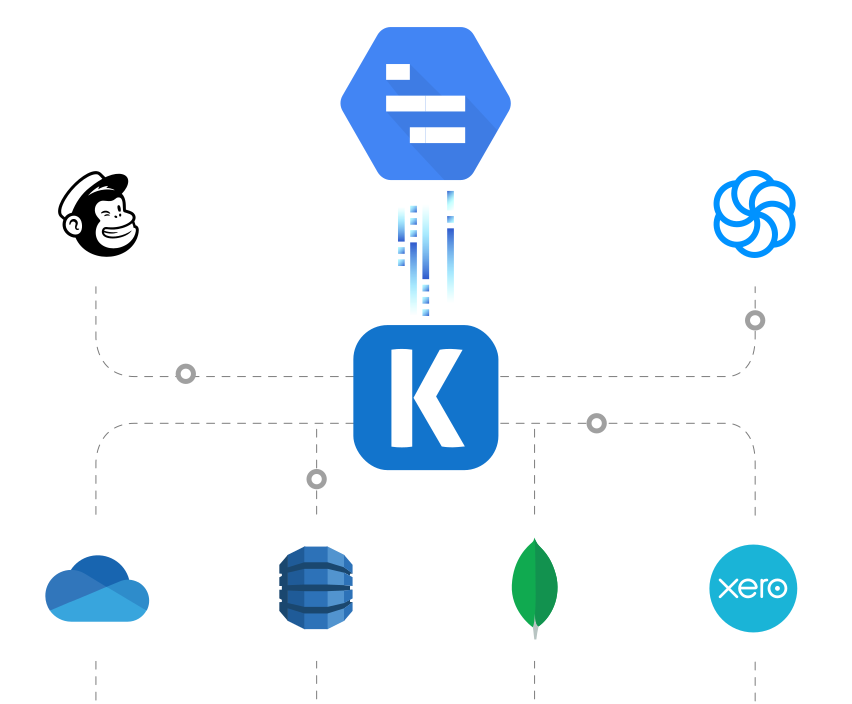
Transfer Google Cloud Trace data to analytics platforms, databases, files, and other monitoring systems for performance analysis and operational reporting. Select nested fields when needed, capture created record IDs, redirect failed rows, and use HTTP diagnostics to review requests and responses.
Replicate Data

Data Archival
Transfer trace data to databases, files, or storage platforms for retention and historical analysis.
Data Analytics
Load trace data into reporting platforms to analyze application performance, latency, and operational trends.
Google Cloud Trace Data Integration
is available in the SSIS Integration Toolkit
Key Features
- Connect integrations to a specific Google Cloud environment using a Project ID.
- Authenticate through OAuth Authorization Code or Service Account credentials.
- Configure OAuth using PKCE, scopes, token files, Client ID, Client Secret, and Redirect URL.
- Retrieve data through supported objects and REST endpoints.
- Apply endpoint-specific filters, batch sizes, and UTC or local time zone settings.
- Add nested fields and secondary outputs using Manage Additional Fields.
- Capture newly created record identifiers through the _GoogleCloudTraceId output.
- Access HTTP request and response details through dedicated diagnostic output columns.
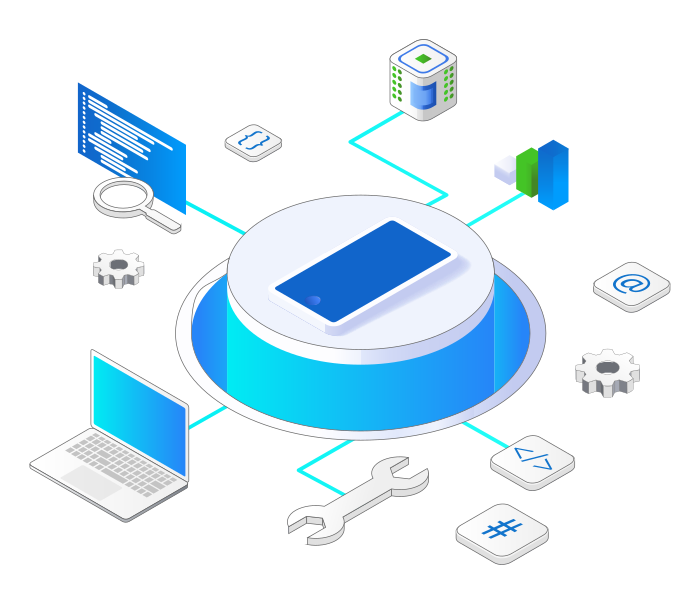
Google Cloud Trace Integration Made Easy
Our solution is easy to use, offering codeless integration between Google Cloud Trace and other applications, databases, files, and reporting systems. Built for Microsoft SQL Server Integration Services, KingswaySoft's Google Cloud Trace integration solution helps users retrieve and write data through supported REST objects, endpoints, and actions. With support for OAuth, Service Account authentication, project-specific connections, endpoint filters, nested JSON fields, time zone controls, record ID outputs, retry handling, and HTTP diagnostics, businesses can develop controlled trace data integration processes.
Our Google Cloud Trace integration solution is available within the Google Services Components of our SSIS Integration Toolkit, a large collection of premium and unique ETL tools to enable greater development productivity. We also offer several additional connectivity solutions to easily integrate Google Cloud Trace with applications such as Microsoft Dynamics 365, SharePoint, HubSpot, and many more.
See our full product offerings for more information.
More Google Services Components
Our Google Services components make it easy to integrate with different services within the ETL process. Each service available has specific components that have been developed to work with all the intricacies of that particular Google Service. In addition to Google Cloud Trace, we support the following Google Services:
Browse Connectors

Google Ads

Google AlloyDB

Google Analytics

Google Appsheet

Google BigQuery
Google Calendar

Google Classroom

Google Cloud Monitoring
Google Cloud SQL

Google Cloud Storage

Google Dataplex
Google Drive

Google Firebase
Google Forms

Google Maps

Google People

Google Search Console
Google Sheets

Google Tag Manager